Pocket vs. Full-Frame Replacement Windows | Michigan Guide

Pocket Windows vs. Full-Frame Replacement Windows
One of the most misunderstood parts of buying replacement windows is something homeowners rarely see on the showroom floor:
How is the new window actually going to be installed?
Two companies can quote the exact same number of windows—and even similar window brands—yet arrive at dramatically different prices because they're proposing completely different installation methods.
The two most common approaches are pocket replacement and full-frame replacement.
Neither is automatically right or wrong.
But they produce very different projects, and you should know which one you're buying before comparing quotes.
First: What Does "Replacement Window" Mean?
This is where much of the confusion starts.
The term replacement window describes the application. It doesn't necessarily describe how the window will be installed.
A replacement window can potentially be installed using:
A pocket or insert installation
A full-frame installation
Other application-specific installation methods
So when a contractor says they're installing "replacement windows," the next question should be:
Are you removing the entire existing window frame, or installing the new window inside it?
That distinction matters.
What Is a Pocket Window Replacement?
A pocket, sometimes called an insert, replacement leaves most of the existing window frame in place.
The existing sash and operating components are removed, and the new window is sized to fit inside the remaining frame.
The original frame essentially becomes the opening for the new window.
Advantages of Pocket Replacement
Pocket installations can make a lot of sense under the right conditions.
Lower Installation Cost
Because less of the existing window is removed, the installation generally requires less labor and fewer finishing materials.
That can make pocket replacement significantly less expensive than full-frame replacement.
Less Disruption
Existing interior and exterior trim can often remain in place.
This can be valuable in homes with:
Ornate woodwork
Historic trim
Difficult-to-reproduce millwork
Recently finished interiors
Exterior details that are difficult to disturb
It may also reduce the amount of painting or finish work required after installation.
Faster Installation
With fewer components being removed and rebuilt, a pocket installation can often be completed more quickly.
What Are the Drawbacks of Pocket Windows?
The biggest limitation is simple:
You're keeping the old frame.
That can be perfectly acceptable when the existing frame is structurally sound, dry, properly integrated into the home, and in good condition.
But if the existing frame has problems, putting a new window inside it doesn't make those problems disappear.
Potential concerns include:
Hidden deterioration
Existing water-management problems
Rot
Previous installation defects
Air leakage around the original frame
Reduced glass area
Reduced opening size
Because the new window fits inside the existing frame, you'll also generally lose some visible glass compared with removing the entire old window.
When Does a Pocket Replacement Make Sense?
We may recommend a pocket installation when:
The existing frame is in excellent condition
Preserving historic or expensive trim is important
The homeowner wants to minimize disruption
Removing surrounding finishes would create unnecessary work
Budget is a major consideration
The existing installation doesn't show evidence of moisture or structural problems
Pocket replacement isn't inherently a "bad" installation.
It simply depends much more heavily on the condition of what you're leaving behind.
What Is a Full-Frame Window Replacement?
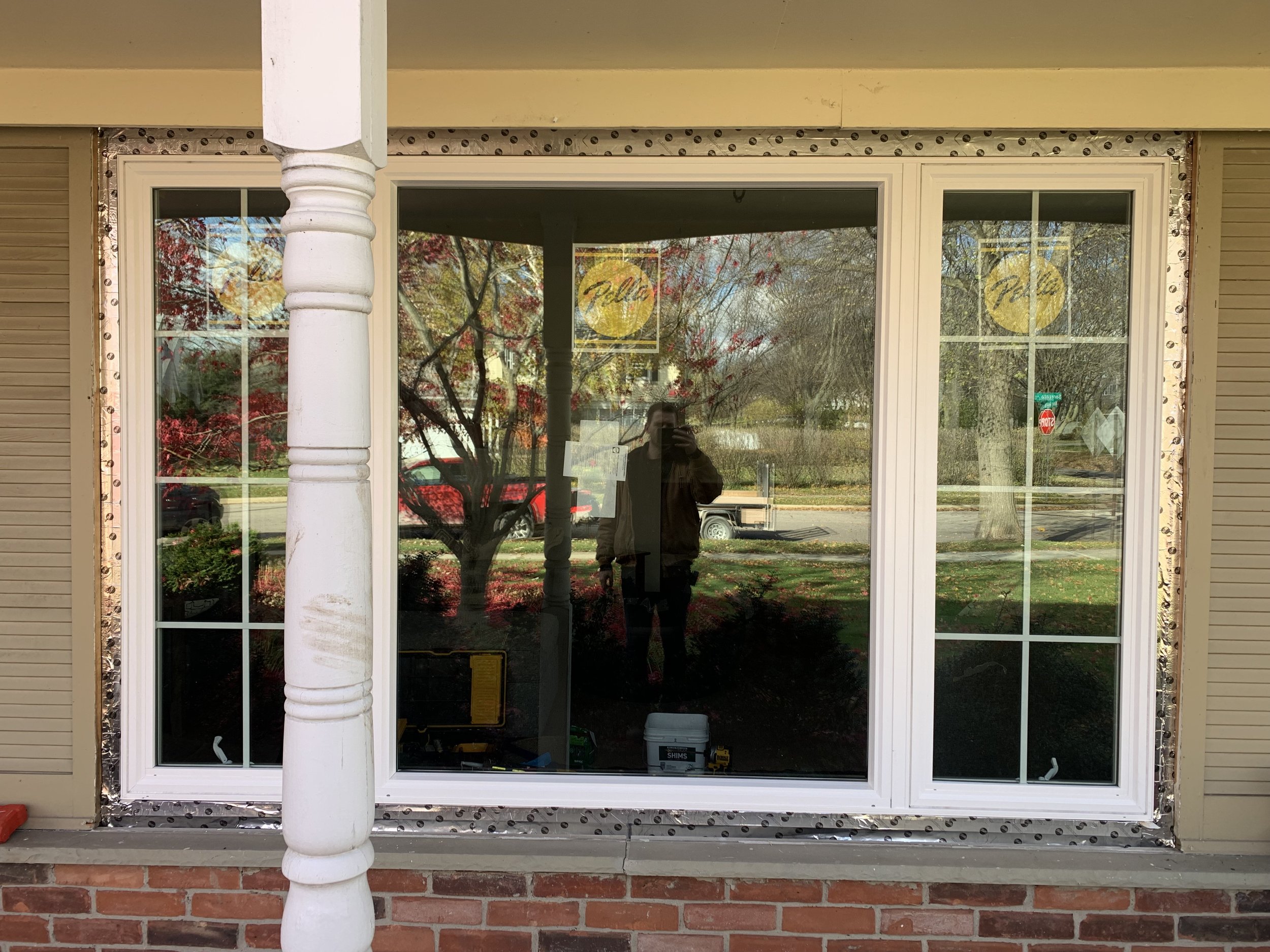
A full-frame replacement removes the existing window unit down to the opening rather than placing the new window inside the old frame.
This gives the installer much greater access to the opening itself.
Depending on the home and installation, that can allow us to address:
Existing flashing
Water-management details
Insulation
Air sealing
Damaged framing
Sill conditions
Opening preparation
Interior and exterior finishing
The new window is then installed into the prepared opening.
Why We Often Prefer Full-Frame Replacement
When we're dealing with older windows, questionable installation methods, deteriorated frames, or evidence of water intrusion, full-frame replacement gives us the ability to see what's actually happening.
That matters.
A beautiful new window doesn't solve a damaged sill underneath it.
And a high-performance window can't correct an air leak around an old frame that was never properly sealed.
By removing the existing unit, we're able to evaluate and prepare the opening before installing the new window.
Better Access for Waterproofing
One of the biggest advantages of full-frame replacement is access to the opening.
Where the home's construction allows, the installation can incorporate appropriate flashing and water-management details around the new window rather than relying entirely on the existing frame and exterior sealants.
The exact flashing method depends on the siding, wall assembly, existing construction, and manufacturer's requirements.
There isn't one universal flashing detail for every home.
But having access to the opening gives the installer significantly more control over the finished system.
Better Access for Air Sealing and Insulation
Full-frame replacement also provides access to the space between the window and the surrounding framing.
That area can then be properly insulated and air-sealed as part of the new installation.
This is important because the efficiency of a window isn't determined only by the glass and frame.
Air moving around the window can undermine the performance of even a very efficient product.
You Can Preserve More of the Original Window Opening
Pocket windows have to fit inside the existing frame.
Full-frame replacement removes that limitation.
Although every new product has its own frame dimensions, removing the old frame generally allows us to make better use of the existing rough opening and avoid unnecessarily shrinking the window simply because we're installing one frame inside another.
Does Full-Frame Replacement Cost More?
Usually, yes.
There's simply more work involved.
A full-frame project may include:
Additional demolition
Opening preparation
Flashing
Insulation
Air sealing
Exterior trim work
Interior jamb extensions
Interior casing
Stool and apron work
Siding modifications
Painting or touch-up work after installation
That's why two window quotes can look dramatically different even when the homeowner believes they're comparing the same project.
One company may be pricing an insert installation.
Another may be removing the entire existing window and rebuilding the opening around the new unit.
Those aren't the same scope of work.
Is Full-Frame Replacement Always Better?
No.
And we don't think homeowners should be told that it is.
If you have a well-built existing frame in excellent condition, beautiful original trim, and no signs of water or air problems, removing everything may create expense and disruption without providing enough additional benefit.
On the other hand, if the frame is deteriorated, the existing installation has failed, or there are water-management concerns, preserving the old frame just to reduce the initial price may not be the best long-term decision.
The condition of the home should dictate the installation method.
Not the sales pitch.
Why Installation Method Matters When Comparing Quotes
If you're collecting replacement-window estimates, don't compare only the total price.
Ask every company:
Is this a pocket installation or a full-frame replacement?
What parts of my existing window are staying?
Will the opening be inspected for damage?
How will the new window be flashed and waterproofed?
How will the opening be insulated and air-sealed?
Will I lose visible glass area?
What interior trim is included?
What exterior finishing is included?
What happens if rot or water damage is discovered?
Once you have those answers, a large difference between two quotes may suddenly make much more sense.
How Does Elite Window & Door Decide?
We don't believe every homeowner should automatically receive the cheapest installation method.
We also don't believe every window needs to be torn completely out simply because full-frame replacement costs more.
Our field team evaluates the existing opening and determines what we're working with before the product is ordered.
We consider:
Existing frame condition
Evidence of moisture
Existing installation details
Interior and exterior finishes
Siding type
Opening construction
Product requirements
Homeowner priorities
Budget
Long-term value
Then we recommend the installation method that makes sense for that specific project.
Know What You're Buying
Homeowners spend a lot of time comparing Pella vs. Andersen vs. ProVia, vinyl vs. fiberglass, double-pane vs. triple-pane, and one warranty against another.
Those are important decisions.
But the installation method can be just as important.
The same window installed two different ways can result in two very different projects.
So before choosing the lowest quote—or the highest one—make sure you understand exactly what's happening to the opening in your home.
Don't just ask which window you're getting. Ask how it's going to be installed.