Why Do My Windows Have Condensation?
Why Do My Windows Have Condensation?
Window condensation is one of the most common concerns we hear from homeowners, especially during a Michigan winter.
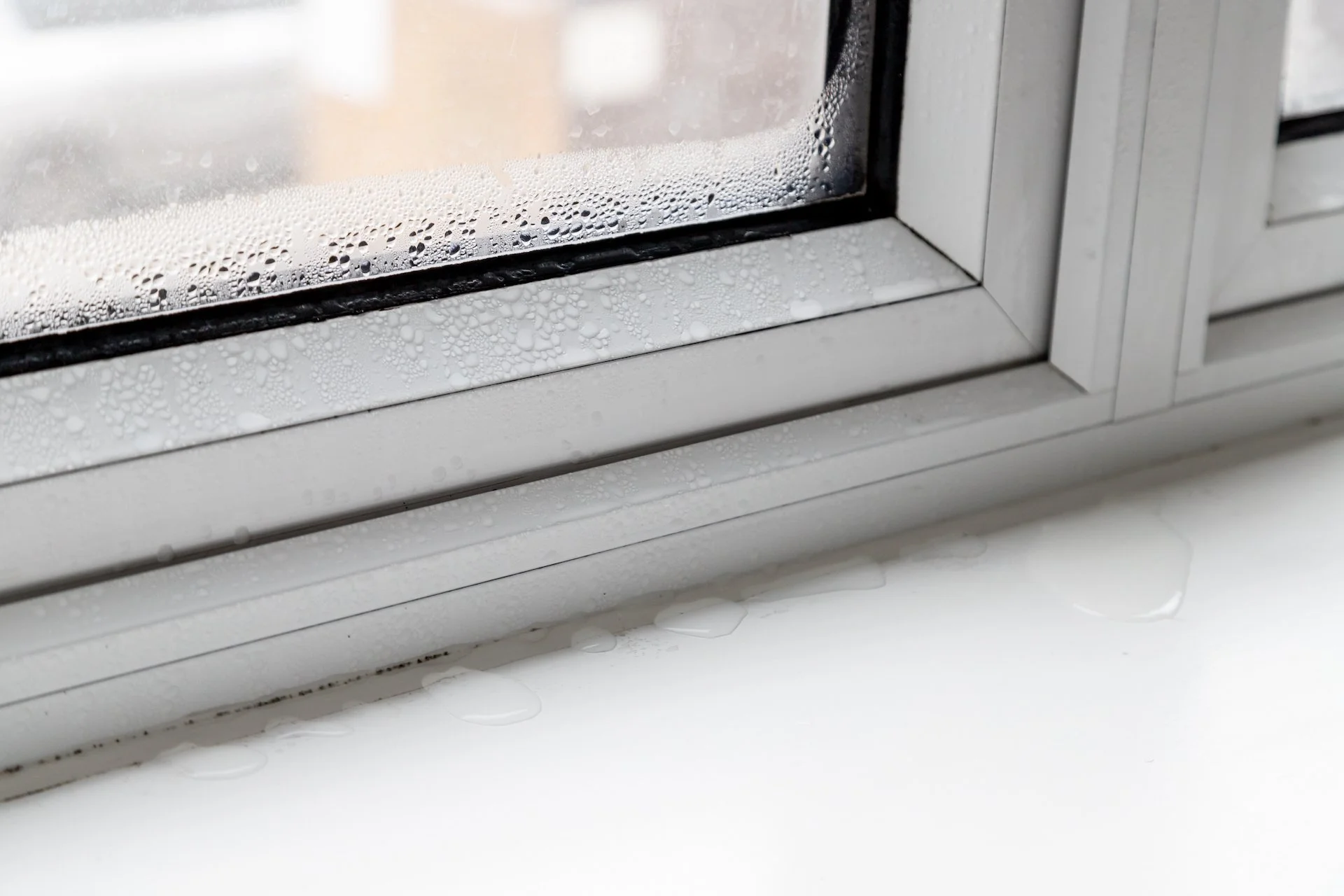
You may notice water collecting along the bottom of the glass, fog on the outside of the window, or moisture trapped between the panes.
Those three situations can look similar, but they mean very different things.
The first question is:
Where is the condensation?
On the inside surface of the glass
On the outside surface of the glass
Between the panes of insulated glass
Knowing where the moisture is located usually tells us whether you are dealing with indoor humidity, normal window performance, or an actual glass failure.
Why Does Condensation Form on Windows?
Condensation happens when warm, moisture filled air contacts a surface cold enough for the moisture in that air to turn into liquid water.
Think about a cold glass of water sitting outside on a humid summer day.
The water on the outside of the glass is not leaking through it. Moisture from the surrounding air is condensing on the cold surface.
Your windows can do the same thing.
During a Michigan winter, the glass is often one of the coldest surfaces inside the home. If indoor humidity is high enough, condensation may form on the interior glass.
Condensation on the Inside of the Window
If moisture is forming on the room side of the glass, the window usually is not leaking.
In most cases, you are seeing a combination of:
cold glass and indoor humidity.
The colder it gets outside, the colder the interior surface of the window becomes.
At the same time, normal household activities continually add moisture to the air.
These can include:
Cooking
Showering
Laundry
Humidifiers
Houseplants
People and pets
Drying clothes indoors
Newly constructed or remodeled building materials
If the indoor humidity is high enough, that moisture will begin condensing on colder surfaces.
Does Interior Condensation Mean My Windows Are Bad?
Not necessarily.
Even a very good window can develop condensation under the right conditions.
Better performing windows generally keep the inside surface of the glass warmer than poorly performing windows, which can reduce the likelihood of condensation.
But no residential window can completely overcome excessive indoor humidity combined with very cold outdoor temperatures.
A homeowner can therefore have brand new, energy efficient windows and still occasionally see condensation.
Why Did My Old Windows Not Condense?
This question comes up surprisingly often after window replacement.
Sometimes homeowners replace old windows and notice condensation that they do not remember seeing before.
That does not automatically mean the new windows are performing worse.
Older windows and older homes can allow substantial amounts of air leakage.
That uncontrolled airflow brings dry winter air into the home and lets humid indoor air escape.
When tighter windows are installed, the home may retain more of its indoor moisture.
In other words:
Your old windows may have been helping control humidity by leaking air.
The new windows did not necessarily create the moisture. They may simply have reduced the uncontrolled ventilation that previously removed it.
If that happens, the solution is usually better humidity and ventilation management, not making the windows leakier.
How Can I Reduce Interior Window Condensation?
The goal is to reduce indoor humidity or improve airflow around the glass.
Some things to check include:
Reduce or turn down whole house humidifiers
Use bathroom exhaust fans during and after showers
Run the kitchen exhaust fan while cooking
Make sure dryers vent outdoors
Avoid drying large amounts of clothing inside
Open blinds or curtains periodically to allow warm room air to reach the glass
Make sure supply registers are not blocked
Use appropriate mechanical ventilation if the home is very tightly sealed
Indoor humidity that feels comfortable when it is 40 degrees outside may be too high when the temperature falls well below freezing.
During colder weather, the home may need to be kept at a lower relative humidity to prevent condensation on windows and other cold surfaces.
Why Should I Care About Interior Condensation?
A little temporary condensation is not usually a window failure.
Persistent moisture is different.
If water regularly collects on the glass and runs onto the frame, sill, casing, drywall, or surrounding woodwork, it can eventually contribute to:
Mold or mildew
Paint damage
Wood deterioration
Staining
Swelling
Damage to trim or drywall
The important distinction is between occasional condensation during extreme weather and moisture that remains present for long periods.
Condensation on the Outside of the Window
Exterior condensation is usually much less concerning.
If moisture appears on the outside surface of the exterior glass, particularly during cool mornings, it can actually be a sign that the insulated glass is doing its job.
With an efficient window, less heat from inside the house reaches the exterior pane.
That means the outside glass can stay cool enough for outdoor humidity to condense on it, similar to dew forming on grass.
Exterior condensation commonly disappears as:
The sun reaches the window
Outdoor temperatures increase
Humidity changes
Air begins moving across the glass
In most cases, there is nothing to repair.
Why Do Some Windows Get Exterior Condensation and Others Do Not?
Several factors can affect it:
Which direction the window faces
Shade from trees or roof overhangs
Outdoor humidity
Wind
Glass coatings
Window efficiency
Nearby landscaping
Overnight temperatures
You may therefore see exterior condensation on one side of a house but not another.
That is normal.
Condensation Between the Glass Panes
This is the type of condensation that usually does indicate a problem.
Modern insulated windows typically contain two or more pieces of glass sealed together as an insulated glass unit.
If moisture, fogging, or a hazy appearance develops between the panes where you cannot wipe it away from either side, the seal around that insulated glass unit may have failed.
Once that seal fails, moisture can enter the space between the panes.
You may notice:
Persistent fogging
A cloudy appearance
Moisture droplets
Mineral deposits
Streaks or haze inside the glass unit
This is commonly referred to as a failed insulated glass unit or seal failure.
Does a Failed Glass Seal Mean I Need a New Window?
Not always.
Depending on the window manufacturer, age, construction, and availability of replacement parts, it may be possible to replace only the insulated glass or sash.
In other cases, repairing the existing product may not be practical or cost effective.
Before replacing the entire window, determine:
Who manufactured it.
Whether the product is still under warranty.
Whether replacement glass or a replacement sash is available.
Whether the frame itself is still in good condition.
A failed piece of glass does not automatically mean the entire window needs to be removed.
What About Condensation on Entry and Patio Doors?
The same basic principles apply.
Glass in entry doors and patio doors can develop interior condensation when indoor humidity is high and outdoor temperatures are low.
Doors can also have additional cold surfaces around:
Glass frames
Hardware
Thresholds
Metal reinforcement
Weatherstripping areas
Some amount of condensation during extreme conditions can therefore occur even when the door is functioning properly.
Persistent water, excessive icing, noticeable drafts, or moisture entering from outside should be evaluated separately.
What About Ice on the Inside of a Window?
Ice forms when interior condensation occurs on a surface that is below freezing.
A small amount during exceptionally cold Michigan weather does not automatically indicate a defective window.
Heavy or frequent icing deserves more attention.
Possible contributors include:
Excessive indoor humidity
Poor performing glass
Significant air leakage
Missing insulation around the frame
Installation issues
Blocked airflow around the window
If the same window repeatedly develops much more ice or condensation than comparable windows in the home, it may be worth having the installation and product evaluated.
Can Better Windows Reduce Condensation?
They can help.
A higher performing window can keep the room side surface of the glass warmer during cold weather.
Features that may influence interior glass temperature include:
Insulated double pane or triple pane glass
Low E coatings
Improved spacer systems
Better frame insulation
Improved air infiltration performance
However, there is an important distinction:
A better window can increase resistance to condensation. It cannot control the amount of moisture inside your house.
Product performance and indoor humidity work together.
Is Window Condensation a Warranty Issue?
It depends entirely on where the condensation occurs.
Inside surface of the glass
Usually an indoor humidity or temperature issue, not a glass warranty failure.
Outside surface of the glass
Usually normal environmental condensation, not a defect.
Between the panes
Potential insulated glass seal failure and possibly a warranty issue.
This is why telling us simply that a window is "fogging" is not always enough.
A photo showing exactly where the condensation is located can usually help determine the next step.
When Should You Have Window Condensation Checked?
Consider having the window evaluated if:
Moisture is trapped between panes
One window performs dramatically differently from similar windows
Water appears to be entering from outdoors
Condensation is causing repeated damage
Heavy icing occurs regularly
You can feel significant air movement around the unit
Surrounding trim or framing shows signs of water damage
These situations can involve more than normal humidity.
The Bottom Line
Window condensation is not one problem.
It is a symptom that can mean different things depending on where it appears.
Condensation inside the glass: usually indoor humidity meeting a cold surface.
Condensation outside the glass: usually normal outdoor moisture and can occur on highly efficient windows.
Condensation between the panes: usually indicates an insulated glass seal failure.
Before assuming your windows need to be replaced, figure out which type of condensation you are seeing.
At Elite Window & Door, we would rather help determine why the condensation is happening before recommending a new product.
Sometimes the answer is a replacement window.
Sometimes it is replacement glass.
And sometimes your windows are doing exactly what they are supposed to do.